Jaws (1975)

Rating A/12

Length 2Hr 4

Release 26.12.1975

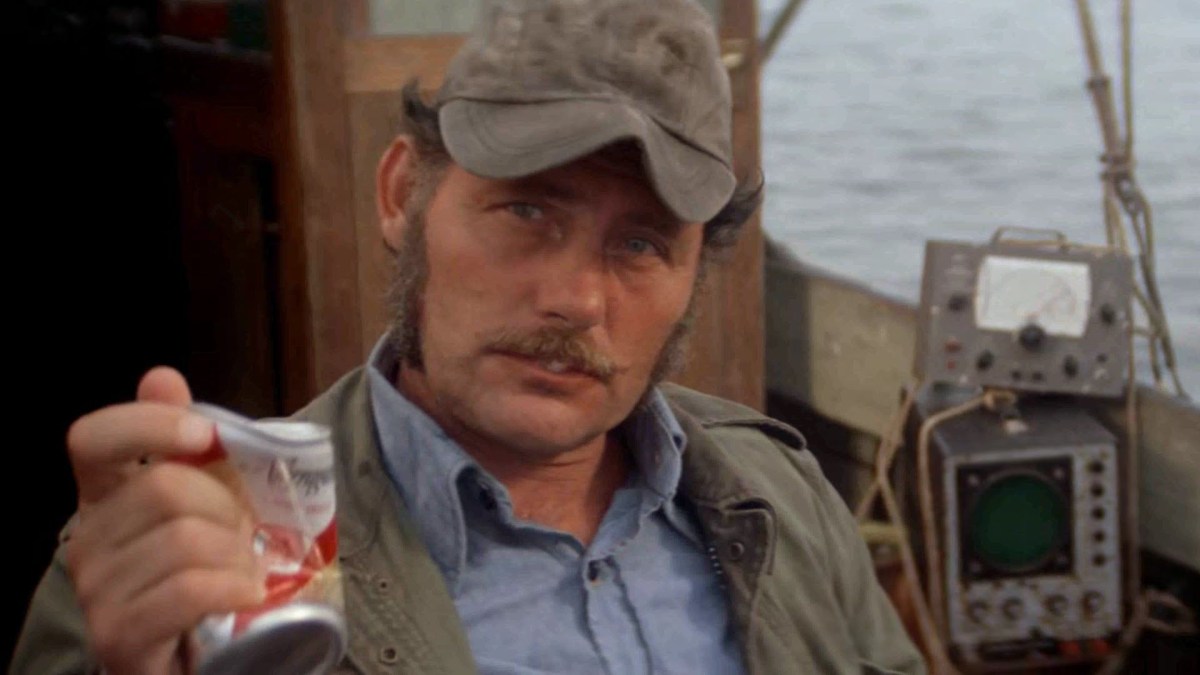
About When a young woman is killed by a shark while skinny-dipping near the New England tourist town of Amity Island, police chief Martin Brody (Roy Scheider) wants to close the beaches, but mayor Larry Vaughn (Murray Hamilton) overrules him, fearing that the loss of tourist revenue will cripple the town. Ichthyologist Matt Hooper (Richard Dreyfuss) and grizzled ship captain Quint (Robert Shaw) offer to help Brody capture the killer beast, and the trio engage in an epic battle of man vs. nature.


First Thoughts

I remember seeing it for the first time on a midweek school night when it aired on ITV. I very much remember being scared.

I remember it being one of the last films I watched as part of my course in the first year, going to the seminar and being one of two students that showed up.

My last viewing before today was for my brother’s birthday, in which I got us tickets for an outdoor screening in London.
The Good

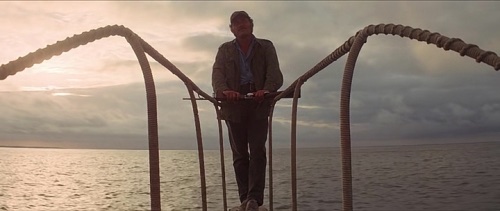
  • It’s a Visually stunning movie. There’s a reason why it’s on so many university courses. This is the go to film for camera shots, framings and movement. The night time shots appear to be filmed in the day with a tonal shift placed over it, allowing you to get a sense of time and still be able to view the action.
  • Much like Creature From the Black Lagoon, it’s a film of two halves. We open in a New England island town and explore tourism politics and economics. Okay, that sounds a bit boring on paper, but it gives us some epic scenes with the Mayor and the townspeople as they ignore the horror that unfolds. The second half is a much more intimate affair and deals with man’s relationship with sharks. What I love more than anything though, is the fact that you learn something new each time you watch.
  • The dialogue is artful and meaningful. Something that has perhaps been lost over the years is visually rich films. Just because there’s a spectacle, doesn’t mean the audience can do without quotable sound bites.
  • Words are not the only audio that has an impact. Much like many horrors, John Williams has created a score that prepares you for the scares Spielberg has in store. The best example being when Hooper goes into the water and he reached the hole in the boat. The music has already, by this point, conditioned you in a Pavlovian way to expect Bruce to make his appearance. It’s been lampooned and referenced so much now that you don’t need to have seen the film to know the association.
  • The trio of Brody, Hooper and Quint. They normal men who are not ripped, they’re not carefully cast to ensure a particular demographic take their seats. The fact that you can’t really pick one of them out as the MVP says everything about the ensemble.
  • The fear factor will never diminish. The film keeps our ‘monster’ so well hidden that it’s really our imaginations in charge. While perhaps the physical effects of ‘Bruce’ the Shark may not be what they once where (speaking more of the commentary of others) I do feel it’s such a well crafted film that you may just be distracted enough.
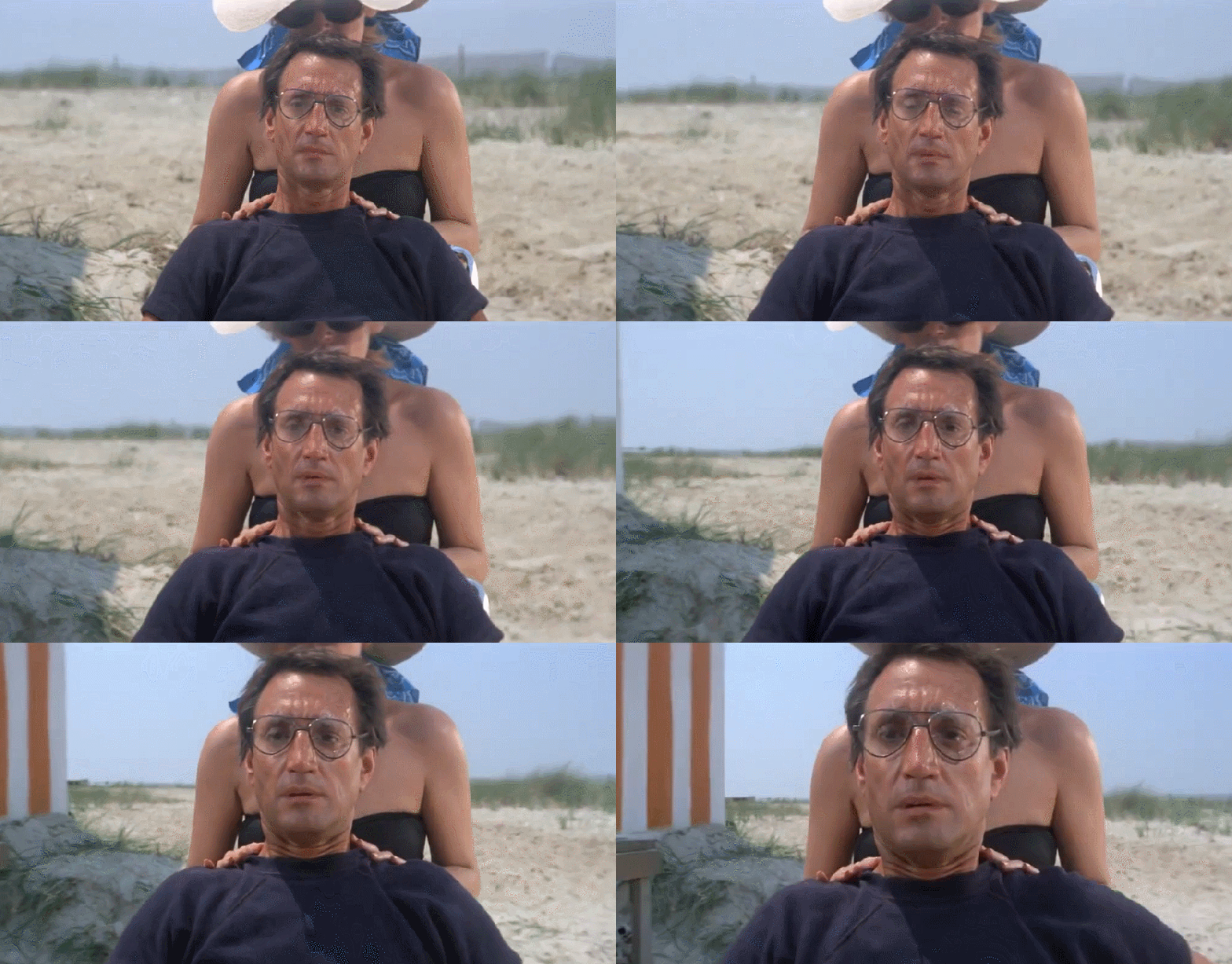
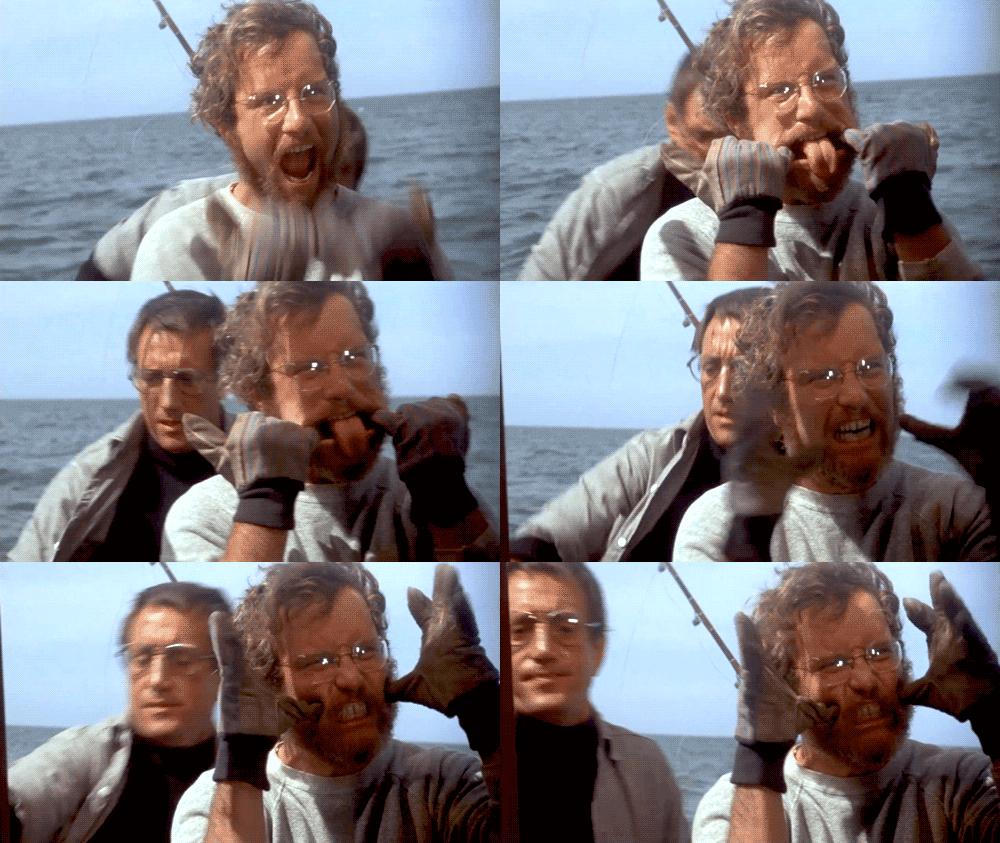
  • There are so many scenes that you can pinpoint as being iconic but my favourite will forever be the comparison of scars. It’s everything that you need in a scene; it’s a showcase of character, it’s humour disarms you and right out of nowhere there’s a gut punch from Quint. That monologue! Visually, having Hooper’s out of focus reactions is haunting. The scene is brilliant at that point and ending it on a downward note would have been fine. Spielberg however pulls it out of the macabre with a rendition of ‘show me the way to go home’ and it’s that upward lift that perfects the scene.

The Bad

  • While I do love the ending and the casual conversation that we fade out to, I can’t help but wish we could see a Brody family reunion.

The Ugly

  • The popularity and success of this movie has resulted in so many rip offs of varying quality. For every ‘good fun’ The Meg that reaches the cinema, there’s a Sharknado in a bargain bin or 3am time slot on a random channel. Not to forget the sequels… of course we all wish we could.
Final Thoughts

What can I say, it’s one of the best films I’ve ever seen. It’s the reason why Spielberg’s work pre-Minority Report is my favourite of any director.
Jurassic Park. Halloween Edition (1993)

Rating: PG

Length: 2hr 8

Release: 15.7.1993

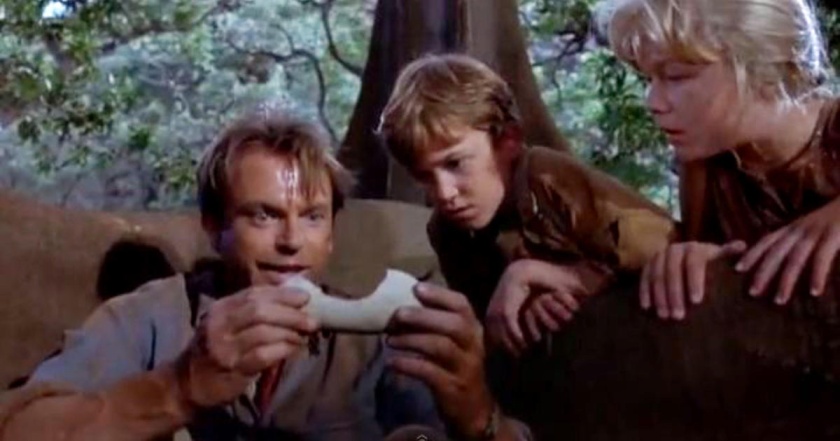
About: In Steven Spielberg’s massive blockbuster, paleontologists Alan Grant (Sam Neill) and Ellie Sattler (Laura Dern) and mathematician Ian Malcolm (Jeff Goldblum) are among a select group chosen to tour an island theme park populated by dinosaurs created from prehistoric DNA. While the park’s mastermind, billionaire John Hammond (Richard Attenborough), assures everyone that the facility is safe, they find out otherwise when various ferocious predators break free and go on the hunt.


This is no normal review. In fact, it’s possibly not a review at all. Everyone knows this is my all time favourite movie and has been since July 1993 when it set me on my path to geekdom.

It’s a film I’ve watched so often, but I don’t think I’ve ever considered it as a horror, or a film to watch as a lead up to Halloween so the fear factor is never going to be there. I’m too amazed and in all honesty, I want to be there too.

So instead, I’m considering how many tropes and themes that come up in horror movies apply to Jurassic Park. I thought I was on a dud mission, but I was very quickly proven wrong.

Creature Feature

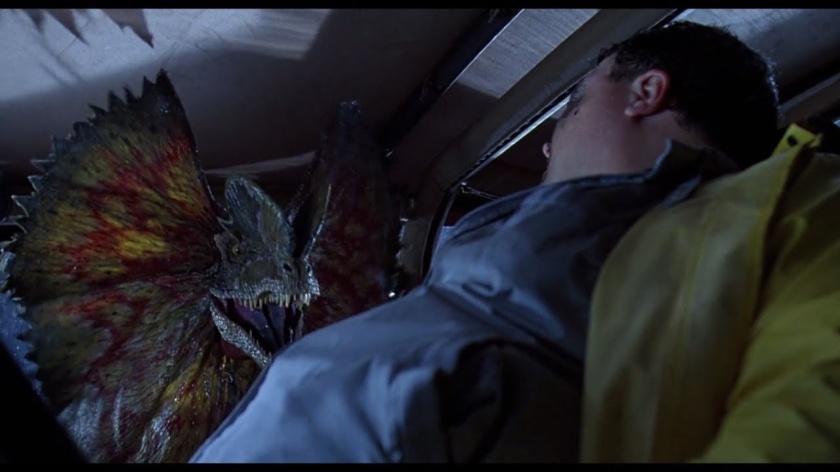
The creature feature is perhaps the most obvious genre this dinosaur disaster fits into. There’s narrative similarities within Jurassic Park and the Creature From the Black Lagoon, a tonal structure that Spielberg brings organically from Jaws and there’s even an audio/visual reference to one of the greatest creature feature: King Kong, just invade you were wondering what they might be keeping on the island. In the same way Black Lagoon has that embedded wonder, Jurassic Park is all smiles until things go very, very wrong.

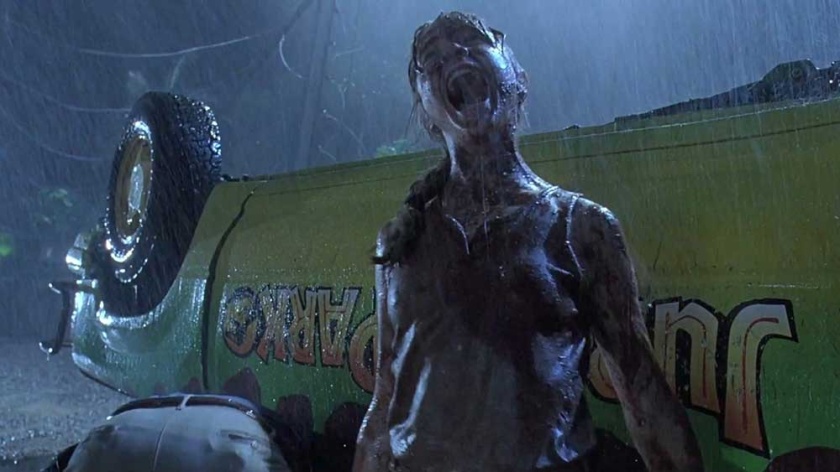
One key trope from the creature feature (and arguably other horrors) that is seen multiple times is the Scream Queen. Both of our females give their lungs a good airing when found face to face with the prehistoric reptiles and join Faye Wray, Julie Adams and Susan Blackline as Hollywood Hollering Royalty.

Science, Bitches!

Science and playing God is a staple theme in many a horror movie. Frankenstein, The Fly and Jekyll & Hyde all have scientists take on the god-like role of creator. In much the same fashion as the previously mentioned films, the scientists of Ingen fails to understand the true nature of the monster in their captivity and they rebel against the creator.

Of course, this is on a much grander scale so the stakes are higher and the town at risk is bigger. While the revulsion for the monster isn’t present, it’s clear not everyone is happy with the creators.

The Slasher

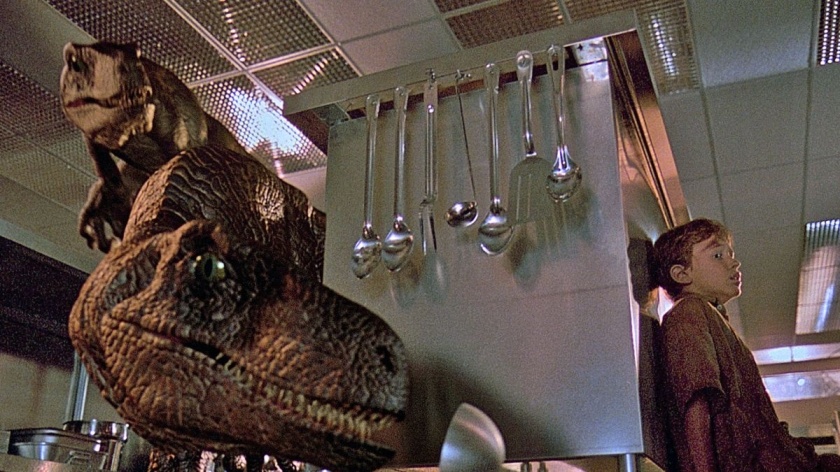
Hear me out because yes, there’s no Freddy or Michael but some of the rules still apply. I am, of course, talking about the raptors and their story arc.

The fact that we don’t get a sighting of the raptors until the last 20 minutes or so is frightening in itself. All we’ve seen, is their destruction and lethal potential, much in the same way we don’t see the shark in Jaws or the knife break flesh in the infamous ‘shower scene’, our imagination makes quick work of filling in the blanks with scares and blood. The raptors are isolated, imprisoned separately, from the rest of the park. Too dangerous: they indeed claim the film’s largest body count.

Of course, like Michael Myers, when they find freedom the raptors set their sights on human victims which brings us to the glorious stalking kitchen scene. Replace the predatory reptiles with Ghostface and this scene could fit seamlessly into a Scream movie.

I’ll agree that there’s more than one, and there’s no motivation forthcoming but you have to admit, sometimes the explanation sucks and ruins the movie.

The Harbinger of Doom

A trope I only really became familiar with thanks to Cabin in the Woods. A meta horror that calls out all the tropes is perfect education for film.

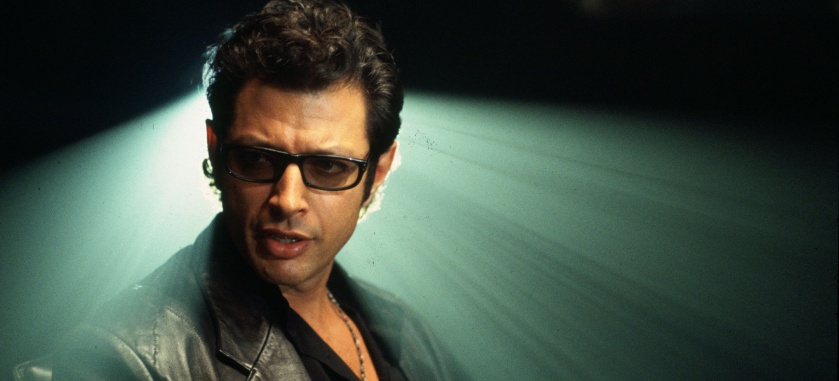
So, there are two characters that fit the bill of a harbinger within Jurassic Park. The first is Robert Muldoon, who is vocal about the raptors and their dangers. However, the key role goes to Goldblum’s Ian Malcolm. Not only is his entire persona as a theorist of chaos an ideal fit, he has a passionate speech warning Hammond of his companies’ naivety in playing with Science, even going so far as call it ‘rape of the natural world’.

Both Malcolm and Muldoon give us some foresight into the horrors that are to be faced even if, as Malcolm puts it, he ‘hates being right all the time.’

Haunted House

So it’s an island, doesn’t mean the haunted house rules don’t apply. The clear trope that can be seen is the fracturing of the group, repeatedly. Those that do end up on their own; Muldoon, the lawyer and Arnold, die in rather painful and bloody ways.


Now you’ve read this, you may see Jurassic Park in a different way, or maybe you’re like Ian Malcolm and consider it …

Either way, go check it out on Netflix. There it isn’t butchered like a Michael Myer’s victim on Halloween (yup ITV! I’m looking at you)

Han x

IT: Chapter Two

Review of Chapter One can be found here.

Rating: 15

Release: 6.9.2019

Length: 2hr 49

About: Defeated by members of the Losers’ Club, the evil clown Pennywise returns 27 years later to terrorize the town of Derry, Maine, once again. Now adults, the childhood friends have long since gone their separate ways. But when people start disappearing, Mike Hanlon calls the others home for one final stand. Damaged by scars from the past, the united Losers must conquer their deepest fears to destroy the shape-shifting Pennywise — now more powerful than ever.

The Good

  • As with Chapter One, the casting is faultless. Not only are the adults perfect in and of themselves, they’re scarily perfect for the grown up versions of the youngsters.
  • Special mention has to go to Bill Hader as Richie. I was so very excited to see him cast and he really did a wonderful job stealing every single scene he’s in. What I love about comedians like Hader is that while people see him as the joker, he’s actually very well equipped to bring the drama. For me, IT has done for Hader what the likes of Awakenings, Insomnia and 24 Hour Photo did for Robin Williams.
  • Jessica Chastain was, certainly in my mind, a risky casting choice. Well, it was certainly one that paid off. She is able to bring us the duality that Sophia Lillis initially presented us with and show a growth of character within Chapter Two.
  • The change in time setting is almost mute when we get the adults. Yes, we’ve lost the nostalgic references but it does make that opening scene a little more haunting. I’m so very glad this scene was kept.
  • I love the ongoing commentary about Bill’s stories not having great endings as perhaps an ironic note to the ending of IT itself. Which also lends itself to the film’s best Easter egg that is one par with a Stan Lee appearance.

The Bad

  • Max Headroom visuals are back and some of the scares intended from Pennywise are lost on me because of this. Again, it’s more the music than the visuals that give me the scares which is a shame as visually, Pennywise is incredible.
  • You have Bill Skarsgård who is exceptional in the role, there’s no doubt about that. There’s a manipulative charm there that festers and creeps under the skin, but everything the actor can build up is scuppered by the CGI and wobbly background that draws your eyes away.

The Ugly

  • The presentation of the interweaving timelines is rather too clunky for me. Unfortunately, due to memory loss being a major plot device I’m not certain there’s another way of making Part Two without the help of the younger counterparts.
  • The film certainly transitioned well between timelines, however I find it treads too much on top familiar ground from Part One. Perhaps if there was overlap of the actors in the previous outing, it wouldn’t stand out so much but I guess we’ll never know.

Final Thoughts

The filmmakers did an incredible job with a difficult source material. It has its faults and probably won’t be something I return to any time soon. However, it is a much-watch for Hader’s performance alone.

Book Review : With the Old Breed: At Peleliu and Okinawa by E B Sledge

The Pacific miniseries from HBO was a challenge for me to watch. I found it enlightening, distressing and heartbreaking. Out of the three men The Pacific followed, Eugene Sledge was the one I had the most questions about, particularly after his conversation with Robert Lecke about faith.

I contacted the one person I figured would have an answer to my question: did Sledge’s bitterness and experience of war have an impact on his faith?

I fully intended to buy Sledge’s memoir anyway, but I was quite surprised when I got a thoughtful response telling me that the war reinforced his faith and that there was something important that didn’t make it into the show. Cue me purchasing a copy for my Kindle there and then and devouring the first 20%.

Having spent so many years of my career developing lessons to explain why a religious person is a consciences objector and the reasons why religions disagree with war. So my main motivation for reading was to see Sledge’s religious commentary and thoughts throughout the war. I always considered them being at odds with each other; either being the cause of a conflict or the reason for someone to avoid the fight.

Sledge’s voice is the most prominent feature of this 300 paged memoir. From his enlistment to the island clean ups, Sledge gives a stark and honest retelling of his experiences. It’s written in such a way that I’m surprised it’s not a book already on high school recommended reading lists; it’s written with sincerity and as a reader you will instantly respect the veteran marine who could have had a much easier life.

It’s by no means an entertaining or an escape read, but it is rewarding as much as it is difficult and something I will come back to in the future. There’s so much to be learnt from Sledge; engrained hatred and prejudice, politics and spirituality. Never have I seen such an open commentary that doesn’t expect anything of you as a reader. Well, at least it didn’t feel like that. The only censoring he did was on the parts of other people.

The description of the horror, brutality and casualties will haunt you. No film or video game will prepare you for the sights, smells and sensations.

The commentary of Sledge’s faith is there enough to understand that it’s something of an intimate experience for him. There’s definitely a sense that there’s more than he says, but you certainly can tell he had a deep rooted bond with his religion. It’ll be something that readers won’t need to read too much into, should it not be an important theme to explore. However, there were two lines that said more to me than the rest of the book. Having a religious experience (not that he names it this in the book) and when he describes having it is very telling. It’s something I’d have loved to have sat down and spoken to him about if he was so inclined.

In terms of the print itself, I would advise against an ecopy given the number of references that are all complied at the end of each chapter. There is the benefit of changing the font size, but not having the notes closer to the passage in question does lose the flow and I found in this case, having a physical copy of the book benefitted me greatly.

The Indian in the Cupboard (1995)

Length: 1Hr 38

Rating: PG

About: On his birthday, Omri (Hal Scardino) is given several simple gifts, including an old wooden cupboard and a small plastic figurine of a Native American man. When he locks the toy inside the cabinet it magically comes to life as a tiny, cagey warrior named Little Bear (Litefoot). The boy then places other toys in the cupboard and they too come to life, even engaging in entertaining battles. But after Little Bear is wounded, Omri begins to understand that his animate toys are not mere playthings.

First Thoughts

This was my birthday film when I was 10. Upon watching it today, I really do wonder why I chose this to watch. Turns out, I’d had quite a month in the cinema and The Indian in the Cupboard would have been my 6th outing in December. Quite incredible really; I don’t remember seeing quite so many in such a short space of time.

The Good

There’s some deep and meaningful themes within the story that appear to be pulled from the book from which the film is adapted. From exploring responsibility to death and funeral rituals, it’s an easily passive education.

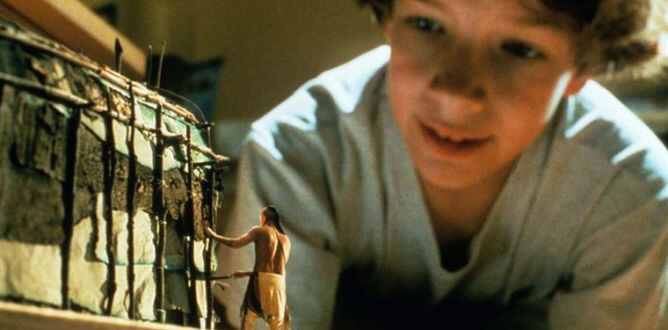
The way in which the film has mastered the perspectives to have the actors as different sizes still stands and I’d say it’s better than films like the Burrowers, which had a larger budget.

It’s quite nice spotting Steve Coogan in a role of humanised toy soldier many years before becoming Octavian in Night at the Museum.

The Bad and the Ugly

Its an odd sort of kid’s film. The plot is rather slow, overly serious and somber for younger viewers, while adults probably would rather check out Mannequin than watch this anxiety riddled kid play with plastic made human.

It’s rather slow in a way that makes it feel overly long. Part of it is to do with the role of Omri; there’s no real development of his character other than him deciding to no longer use the cupboard. I’d have liked to have seen him become a more confident child. By lacking a significant development, it subdues what should be an uplifting ending.

Final Thoughts

It was nice to watch this film again, but I can see why I’ve not rushed to see it again.

Bird Box – 15

Length- 2 Hr 4

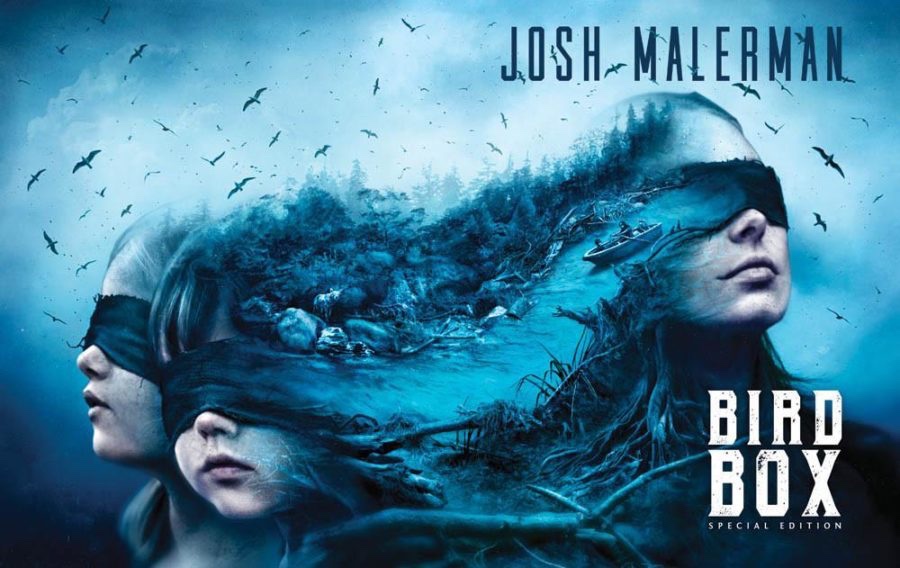
About- When a mysterious force decimates the population, only one thing is certain — if you see it, you die. The survivors must now avoid coming face to face with an entity that takes the form of their worst fears. Searching for hope and a new beginning, a woman and her children embark on a dangerous journey through the woods and down a river to find the one place that may offer sanctuary. To make it, they’ll have to cover their eyes from the evil that chases them — and complete the trip blindfolded.

The Good

Sandra Bullock is able to hold her own in Bird Box. She’s long been considered leading lady material, but it’s taken her time to break out from the romantic comedy role or plucky positivity hound. The sour and angry demeanour that once seemed so alien and forced in some of her performances fits her like a glove. She is scary and heartbreakingly detached from the children in her care and I don’t think that was something I would have seen as a convincing role from Bullock even 5 years ago.

Let’s face it, this film is A Quiet Place with a different bodily sense being the focus. That in itself isn’t significant or would encourage those who’ve seen the John Krasinski directed film to watch this approach. However, what I will say this has, that A Quiet Place perhaps lacks is the body count. A Quiet Place feels stifled by its limited cast, while Bird Box allows you to explore the aftermath as a society, rather than a family.

It’s a curious story, which an ending that is much more hopeful than I was expecting. I’ve heard talk of A Quiet Place gaining a sequel, which is odd as I don’t think there was enough to it, or characters sympathetic enough for me to wish for more. Bird Box, on the other hand, is well set up for a sequel.

The Bad

It is a little too derivative. Something that I feel is more to do with timing than anything else. It’s A Quiet Place meets Mom & Dad; both films that were released earlier this year. Mom & Dad is in itself a sudo remake of the 1976 Who Can Kill a Child? Sometimes, with films like these it doesn’t matter which is better, just which one got there first.

It was a sensible thing to have it released on Netflix rather than a theatrical release. I’m not sure people would have dropped the money on a film that, on paper, seems to be A Quiet Place bandwagon jump.

The Ugly

Its a violent affair and it all comes at once. I’m not a squimish person, but I found a number of scenes just a little tough to handle. At the root of this, is perhaps the fact that when faced with this sort of situation, the mob mentality in our own society would result in this sort of violence.

Final Thoughts

It’s a decent watch and I’m always grateful to see Sandy Bullock on the screen but I can’t see it jumping to people’s most loved films. However, if I’m watching films of this ilk; I’d rather watch Who Can Kill a Child? again.